



All businesses invest in SEO, advertising, social media, email, and content marketing because these tools are meant to generate leads and sales. But when those tools are implemented separately rather than as a whole, the result will be visitors to their websites but nothing more.
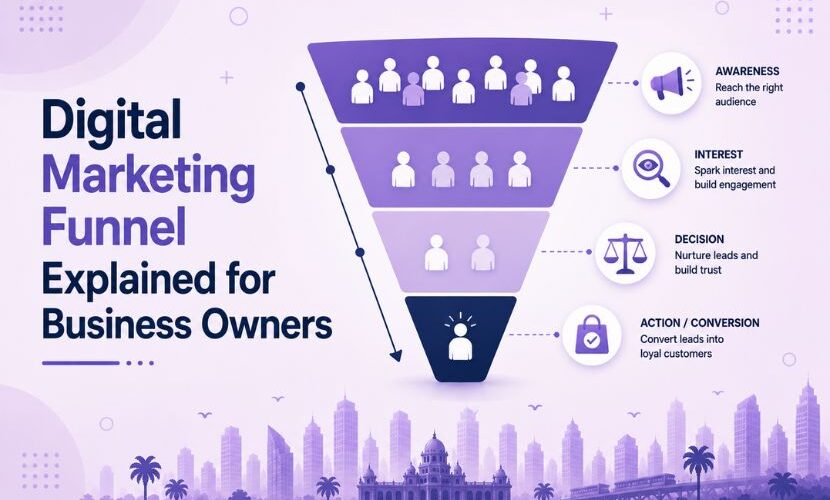
Digital Marketing Funnel is a tool that lets businesses comprehend how their prospective clients pass from learning about their brands to becoming their customers. In other words, the funnel sends out targeted messages rather than the same message to everybody. No matter whether you concentrate on Sales Funnel Marketing, Lead Generation Funnel, or Customer Journey, everything will become easier with a well-designed funnel.
Quick Answer: What Is a Digital Marketing Funnel?
The digital marketing funnel is a systematic process which enables the transformation of potential clients into purchasers. This helps companies to:
Attract the right audience Establish trust by providing value to the audience
- Acquire quality leads
- Boost conversions
- Enhance customer retention rate
- Evaluate marketing performance
Unlike separate marketing campaigns, the digital marketing funnel uses all the channels to ensure the success of your business.
Why Every Business Needs a Digital Marketing Funnel
Clients do not buy products right away when visiting the site for the first time. First of all, they will try to figure out whether the company solves their issue, compare various companies, read the reviews and study the websites before buying the product or service.
Customers rarely make a purchase the first time they visit a website. They usually research the problem, compare different businesses, read reviews, explore websites, and only then make a decision.
Without a structured funnel, businesses often spend money driving traffic but struggle to convert visitors into customers. A digital marketing funnel ensures that each interaction moves prospects closer to a purchase by addressing their questions, concerns, and expectations at every stage.
It also helps businesses understand where potential customers drop off, making it easier to improve campaigns and allocate marketing budgets more effectively.
Understanding the Customer Journey
The Customer Journey includes every interaction a customer has with your business before and after making a purchase.
A typical journey looks like this:
Awareness → Consideration → Decision → Purchase → Retention
Each stage signifies different intentions of customers. An initial visitor will need information while a customer who intends to buy will require service information along with details of trust and contact.
Understanding this journey allows businesses to create relevant experiences instead of using the same marketing message for every visitor.
The Three Stages of the Digital Marketing Funnel
TOFU (Top of Funnel): Creating Awareness
Top of the Funnel involves targeting those individuals who might be interested in your business but have no idea about it. At this point, the customer is seeking answers to his questions, and not seeking out your business specifically. The following TOFU tactics work well:
- SEO Strategy
- Educational blogs
- Guides and resources
- Social media content
- Informative videos
A strong Content Marketing Funnel helps answer customer questions while building credibility. Search engine optimisation also plays a key role by helping businesses appear when users begin researching a topic.
The goal at this stage isn’t immediate sales—it’s building awareness and trust.
MOFU (Middle of Funnel): Building Trust
Once people understand their problem, they begin comparing different solutions. This is where businesses must demonstrate expertise and help prospects make informed decisions.
Effective MOFU activities include:
- Service pages
- Case studies
- Comparison articles
- FAQs
- Email newsletters
- Downloadable resources
This stage is also where the Lead Generation Funnel becomes important. Businesses encourage visitors to take meaningful actions such as booking a consultation, requesting a demo, downloading a guide, or subscribing to updates.
Email Marketing plays an important role by nurturing leads with helpful information until they’re ready to move forward.
BOFU (Bottom of Funnel): Driving Conversions
Customers are prepared to decide when they reach the bottom of the funnel. The focus shifts from education to conversion.
Businesses should make it easy for prospects to take action through:
- Clear service information
- Strong calls-to-action (CTAs)
- Customer testimonials
- Contact forms
- Landing Page Optimization
A well-optimised Conversion Funnel removes unnecessary barriers and makes the buying process simple. Businesses can also use Retargeting Ads to reconnect with visitors who left the website without completing an enquiry or purchase, increasing the chances of conversion.
How Different Marketing Channels Support the Funnel
More than one channel is required to make an efficient marketing funnel. Every digital marketing strategy plays a particular role in the buyer’s journey.
- SEO Strategy appeals to people looking for information.
- Content Marketing informs customers and gains their trust.
- PPC Funnel targets buyers with a higher purchasing intention.
- Email Marketing develops buyer relationships.
- Retargeting Ads attract back people who showed interest but failed to make any action during the first visit.
Marketing Automation automates all follow-ups, emails, and customer communication, making sure that not even a single prospect is missed.
Common Funnel Mistakes Businesses Make
Even businesses with healthy website traffic can struggle to generate leads if their funnel isn’t properly planned. Common mistakes made include:
- Requesting a sale without establishing trust first.
- Redirecting all visitors to one landing page.
- Neglecting to nurture leads after collecting inquiries.
- Lack of alignment between content and customer intention.
- Failing to measure conversions and customer behaviour.
Regularly reviewing funnel performance using tools like Google Analytics helps businesses identify where visitors drop off in the journey and what improvements are needed.
How to Measure Funnel Success
A marketing funnel should be measured throughout the customer journey rather than only at the final sale. Some of the most important metrics are:
- Lead Generation
- Conversion Rate
- Customer Acquisition
- Performance of Landing Pages
- Cost per Conversion
- Email Engagement
- CRO (Conversion Rate Optimization)
Tracking these metrics enables companies to know what is working in their marketing efforts.
Why Businesses Choose Thistle Media
Creating an effective Digital Marketing Funnel requires every stage of the customer journey to work together—from attracting the right audience to converting and retaining customers.
At Thistle Media, we help businesses build integrated marketing funnels by combining SEO, content marketing, PPC advertising, email marketing, landing page optimisation, and performance tracking into a single strategy. By aligning each marketing channel with your business goals, we focus on generating qualified leads, improving conversions, and delivering sustainable long-term growth rather than isolated campaign results.
Conclusion
Digital Marketing Funnel offers businesses a strategic way to attract, nurture, and convert customers. Using the information about Customer Journey and aligning TOFU, MOFU, and BOFU with relevant marketing tactics, businesses get a way of creating an efficient growth strategy from disconnected marketing activities.
No matter whether you decide to invest in SEO Strategy, Content Marketing Funnel, Email Marketing, PPC Funnel, Retargeting Ads or Marketing Automation – success is ensured when you make sure each process is related to the next one in the funnel.
If your marketing channels are generating traffic but not enough conversions, it’s time to rethink your funnel. Thistle Media helps businesses build integrated digital marketing strategies that turn visitors into loyal customers.
FAQs
What is a Digital Marketing Funnel?
A Digital Marketing Funnel is a model that helps to guide customers in their buying process through different steps such as awareness, consideration, and conversion.
What is the difference between a Digital Marketing Funnel and Sales Funnel Marketing?
Digital Marketing Funnel emphasizes attraction and cultivation of the prospects using digital methods while Sales Funnel Marketing is about converting the qualified prospects into customers.
How can SEO contribute to a digital marketing funnel?
SEO will help to attract the right kind of people, give the answers to customer’s questions and provide the useful content at every step of the journey.
Why is lead nurturing important?
Lead nurturing will keep your prospects involved with valuable content, email communications and following up until they decide to buy.
What is the importance of CRO in a marketing funnel?
CRO will enhance the user experience and make the website more appealing, which means higher percentage of visitors will convert into leads and customers.
How can businesses measure the success of their marketing funnel?
Businesses should monitor metrics such as Lead Generation, Conversion Rate, Customer Acquisition, landing page performance, email engagement, and overall funnel performance using analytics tools like Google Analytics.
Leave A Comment