



Digital marketing has transformed how businesses attract customers, build trust, and drive sustainable growth. Today, consumers rarely make purchasing decisions without researching online first. Whether they’re looking for a hospital, educational institution, software solution, real estate property, or ecommerce product, they compare brands, read reviews, explore websites, watch videos, and seek reliable information before making a decision.
However, not every business requires the same marketing approach. A healthcare provider has different customer expectations than an ecommerce brand, while a manufacturing company follows a completely different sales cycle than a SaaS business. This is why industry-specific digital marketing has become essential.
Instead of relying on a one-size-fits-all strategy, businesses need digital marketing services tailored to their industry, audience, competition, and business objectives. A successful digital marketing strategy combines multiple channels—including SEO, performance marketing, social media marketing, content marketing, email marketing, conversion optimization, AI search optimization, and analytics—to reach customers throughout their buying journey.
Quick Answer: Which Industries Benefit Most from Digital Marketing?
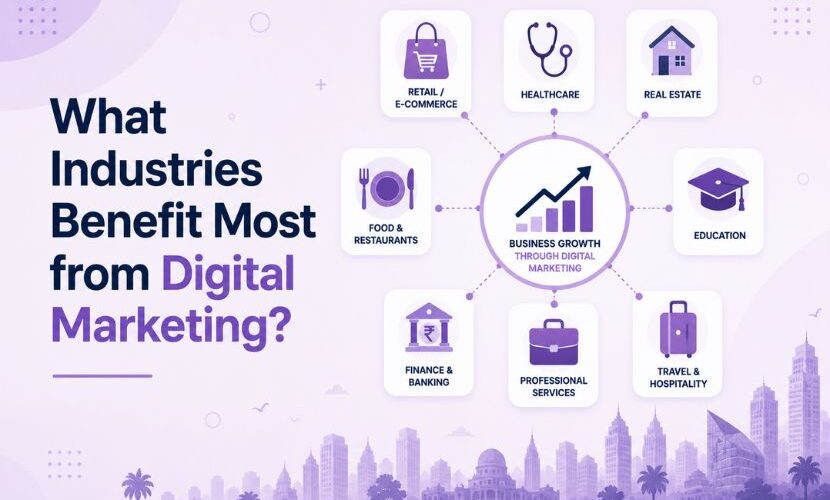
Almost every industry benefits from digital marketing, especially those where customers research extensively before making a purchase or enquiry.
Industries that gain significant value include:
- Healthcare
- Education
- Real Estate
- Manufacturing
- SaaS & Technology
- Ecommerce
- Hospitality
- Finance & Professional Services
The ideal strategy varies by industry, customer behaviour, and business goals. While healthcare organizations focus on building trust and credibility, ecommerce businesses prioritize product visibility and conversions, and B2B organizations emphasize lead generation and nurturing.
Why Industry-Specific Digital Marketing Matters
Although the same digital marketing channels are available to every business, the way they are used differs significantly across industries.
Every industry has unique:
- Customer behaviour
- Search intent
- Buying journey
- Competition
- Conversion goals
- Content requirements
- Trust signals
For example, a patient searching for a hospital wants expert medical information and positive patient reviews before booking an appointment. A software buyer compares features, pricing, and case studies. Someone buying clothing online focuses on product reviews, pricing, delivery options, and offers.
An effective digital marketing strategy combines:
- Search Engine Optimization (SEO)
- Local SEO
- Performance Marketing
- Social Media Marketing
- Content Marketing
- Email Marketing
- Marketing Automation
- Conversion Rate Optimization (CRO)
- Online Reputation Management
- AI Search Optimization
- Answer Engine Optimization (AEO)
- Generative Engine Optimization (GEO)
The right combination depends on where customers are in their decision-making journey.
Healthcare Industry: Building Trust and Patient Acquisition
Healthcare is one of the most competitive industries online. Patients often search for symptoms, treatments, doctors, hospitals, and healthcare reviews before scheduling appointments.
An effective healthcare digital marketing strategy includes:
- Healthcare SEO
- Local SEO and Google Business Profile optimization
- Google Ads for treatments and specialties
- Social media awareness campaigns
- Doctor branding
- Educational blogs and patient resources
- Video marketing
- Online reputation management
- WhatsApp appointment campaigns
- Email newsletters
- AI Search Optimization
- AEO for patient questions
The primary objective is to establish trust while making healthcare services easily accessible to patients searching online.
Education Industry: Increasing Student Enquiries
Educational institutions compete to attract students researching courses, faculty, placements, infrastructure, and career opportunities.
Successful education marketing combines:
- Education SEO
- Course-specific landing pages
- Google Ads for admissions
- Meta advertising campaigns
- Student success stories
- Social media engagement
- YouTube marketing
- Email nurturing campaigns
- WhatsApp counselling
- Webinar promotions
- Conversion-focused landing pages
These strategies help institutions improve visibility while generating quality admission enquiries.
Real Estate Industry: Generating Qualified Property Leads
Buying property is a high-value decision involving extensive online research.
Real estate digital marketing includes:
- Real Estate SEO
- Local SEO
- Google Search campaigns
- Meta Lead Ads
- Property landing pages
- Video walkthroughs
- Instagram and Facebook campaigns
- Email automation
- WhatsApp follow-ups
- Retargeting campaigns
- Lead nurturing
- Conversion optimization
Using multiple digital channels ensures consistent engagement throughout the customer’s buying journey.
Manufacturing Industry: Driving B2B Lead Generation
Manufacturing companies increasingly rely on digital platforms to connect with distributors, procurement teams, and business buyers.
A strong manufacturing strategy includes:
- Manufacturing SEO
- Technical content marketing
- Product catalog optimization
- Google Ads
- LinkedIn marketing
- Account-Based Marketing (ABM)
- Email marketing
- Marketing automation
- Lead nurturing campaigns
- Website optimization
- Analytics and reporting
These channels help manufacturers generate qualified B2B enquiries while strengthening their industry authority.
SaaS & Technology Industry: Accelerating Customer Acquisition
Software buyers compare multiple platforms before making purchasing decisions.
An effective SaaS marketing strategy combines:
- SaaS SEO
- Google Search campaigns
- LinkedIn Ads
- Product comparison pages
- Case studies
- Educational blogs
- Webinar marketing
- Product demo campaigns
- Email automation
- Retargeting
- Conversion Rate Optimization
- AI Search Optimization
These strategies help software companies attract users while reducing customer acquisition costs.
Ecommerce Industry: Increasing Online Sales
Ecommerce businesses compete for product visibility across search engines, marketplaces, and social media.
A comprehensive ecommerce strategy includes:
- Ecommerce SEO
- Google Shopping Ads
- Performance Max campaigns
- Meta Shopping Ads
- Product optimization
- Category page optimization
- Social commerce
- Influencer marketing
- Email marketing
- WhatsApp marketing
- SMS campaigns
- Retargeting
- Conversion optimization
Success depends on attracting the right visitors and converting them into repeat customers.
Hospitality Industry: Driving Direct Bookings
Hotels, restaurants, resorts, and travel businesses depend heavily on digital visibility and customer trust.
Digital marketing strategies include:
- Hospitality SEO
- Local SEO
- Google Hotel Ads
- Social media marketing
- Influencer collaborations
- Video marketing
- Online reputation management
- Review generation
- Seasonal advertising campaigns
- Email marketing
- Booking conversion optimization
These activities help hospitality brands improve direct bookings while reducing dependence on third-party platforms.
Finance & Professional Services: Building Authority and Trust
Financial institutions, consulting firms, law firms, insurance providers, and professional service businesses require credibility to generate enquiries.
Their digital marketing strategy should include:
- SEO
- Local SEO
- Google Ads
- LinkedIn marketing
- Educational content
- Financial calculators
- Webinars
- Email nurturing
- Lead generation campaigns
- Online reputation management
- AI Search Optimization
The focus is on demonstrating expertise while generating high-quality business enquiries.
How Modern Digital Marketing Has Evolved
Today’s digital marketing extends beyond traditional SEO.
Businesses must combine multiple strategies, including:
- Search Engine Optimization (SEO)
- Performance Marketing
- Social Media Marketing
- Content Marketing
- Email Marketing
- Marketing Automation
- Conversion Rate Optimization (CRO)
- AI Search Optimization
- Answer Engine Optimization (AEO)
- Generative Engine Optimization (GEO)
- Analytics and Reporting
Together, these channels improve visibility, attract qualified audiences, nurture prospects, and increase conversions across every stage of the customer journey.
Choosing the Right Digital Marketing Strategy
Before investing in digital marketing, businesses should understand:
- Who their customers are
- Where customers spend time online
- How customers search for solutions
- Which channels influence purchasing decisions
- What business goals they want to achieve
- How success will be measured
Rather than investing equally across every platform, businesses should prioritize the channels that deliver the greatest return for their industry.
Why Choose Thistle Media?
Every industry has different audiences, buying behaviours, and growth opportunities. At Thistle Media, we develop customized digital marketing strategies that align with business goals rather than applying a generic marketing approach.
By combining SEO, performance marketing, social media marketing, content strategy, AI Search Optimization, AEO, GEO, conversion optimization, and analytics, we help businesses improve online visibility, generate qualified leads, strengthen customer engagement, and achieve measurable growth.
Conclusion
Digital marketing is no longer limited to improving search rankings. Businesses achieve the best results when multiple channels work together.
SEO builds long-term visibility, paid advertising delivers immediate traffic, social media strengthens brand awareness, content marketing builds authority, email marketing nurtures leads, conversion optimization increases sales, and AI-powered search strategies prepare businesses for the future of online discovery.
Whether you’re in healthcare, education, real estate, manufacturing, SaaS, ecommerce, hospitality, or professional services, choosing the right combination of digital marketing services can help you reach the right audience, generate quality leads, and build sustainable business growth.
Frequently Asked Questions (FAQs)
1. Which industries benefit the most from digital marketing?
Almost every industry can benefit from digital marketing, but it is particularly effective for healthcare, education, real estate, manufacturing, SaaS, ecommerce, hospitality, finance, and professional services. The right strategy depends on your audience, business goals, and customer journey.
2. Why is industry-specific digital marketing important?
Every industry has unique customer behaviour, competition, and buying cycles. An industry-specific digital marketing strategy helps businesses choose the right channels, messaging, and campaigns to attract qualified leads and improve conversions.
3. What digital marketing services should businesses invest in?
A well-rounded digital marketing strategy may include Search Engine Optimization (SEO), Performance Marketing (Google Ads and Meta Ads), Social Media Marketing, Content Marketing, Email Marketing, Local SEO, Conversion Rate Optimization (CRO), Online Reputation Management (ORM), AI Search Optimization, Answer Engine Optimization (AEO), and Generative Engine Optimization (GEO).
4. How does SEO support digital marketing?
SEO helps improve a website’s visibility in search engine results, making it easier for potential customers to find your business organically. It works alongside other digital marketing channels to increase traffic, build authority, and generate long-term growth.
5. Is paid advertising better than SEO?
Both serve different purposes. Paid advertising delivers immediate visibility and leads, while SEO provides long-term organic traffic and sustainable growth. Businesses often achieve the best results by combining both strategies.
6. How does social media marketing help businesses?
Social media marketing increases brand awareness, engages target audiences, builds customer relationships, promotes products or services, and supports lead generation through both organic content and paid campaigns.
7. What is AI Search Optimization, and why does it matter?
AI Search Optimization helps businesses create content that is easily understood and referenced by AI-powered search platforms and conversational search engines. It improves visibility as users increasingly rely on AI-generated answers instead of traditional search results.
8. What are AEO and GEO in digital marketing?
Answer Engine Optimization (AEO) focuses on creating content that directly answers users’ questions for search engines and voice assistants. Generative Engine Optimization (GEO) prepares content to perform well in AI-driven search experiences by emphasizing expertise, relevance, and trustworthiness.
9. How can digital marketing help generate more qualified leads?
Digital marketing attracts the right audience through targeted SEO, paid advertising, content marketing, social media campaigns, email nurturing, and optimized landing pages. This helps businesses generate higher-quality leads that are more likely to convert.
10. How do I choose the right digital marketing strategy for my business?
Start by understanding your target audience, business objectives, competition, and customer journey. Then select the marketing channels that best align with your goals. Working with an experienced digital marketing agency can help you build a customized strategy that delivers measurable business growth.
Leave A Comment